Maximising the quality and appeal of outdoor spaces through effective litter prevention
Posted on 26th January 2026
One of the key design considerations when planning and equipping a public outdoor space is to ensure it can be kept clean, safe and litter-free as much as possible during routine use.
Clean outdoor spaces are not only environmentally beneficial, both from a biodiversity perspective and to minimise health and safety risks, but they also contribute to them being used more. This is primarily due to how the public perceives litter and the overwhelmingly negative view that most would rather simply avoid using heavily littered areas.
It may not be a recent issue, but the strength of feeling towards litter problems in local communities is illustrated by the fact that, in many areas, members of the public regularly volunteer to undertake their own litter-picking. Couple this with the waste reduction and recycling routines that most people have adopted and see as the norm in their own households and businesses, and it is clear that proper litter management in public areas must be regarded as a priority for spaces to succeed.
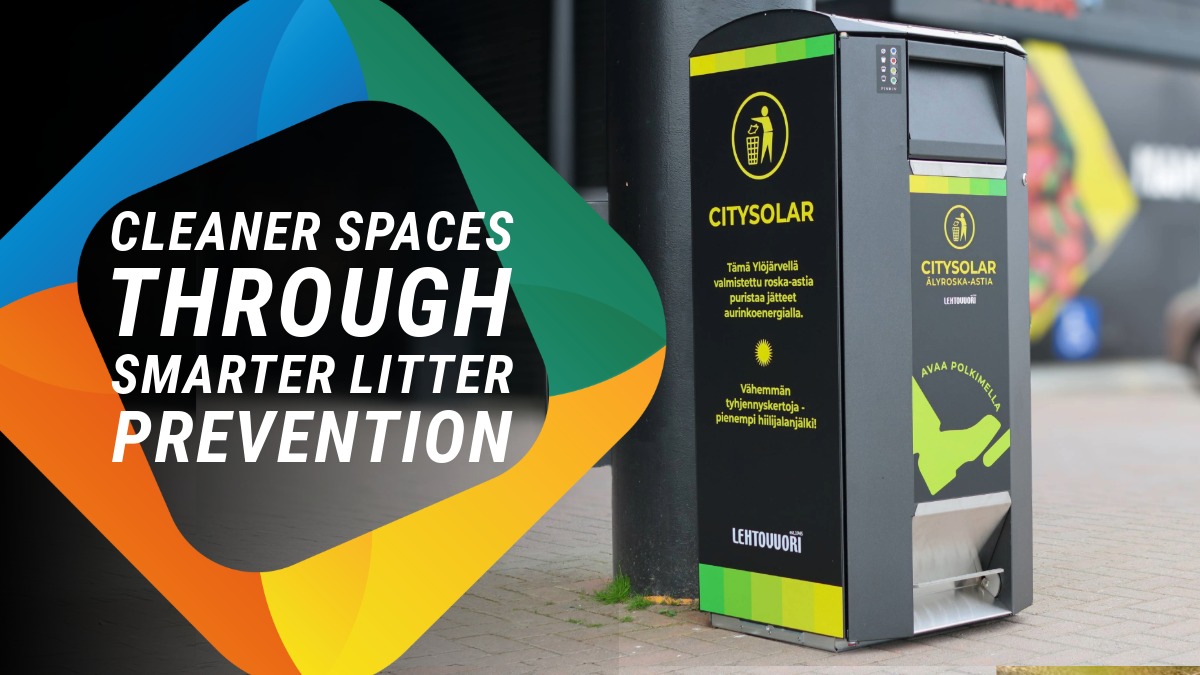
The good news is that innovation in litter bin design and materials continues to offer landscape architects, developers and site owners an ever-increasing choice for effective litter prevention. And technology and inventive design is now also playing an even more important role as the new CitySolar litter bin recently introduced by Bailey Street Furniture Group (BSFG) demonstrates.
Why clean outdoor spaces matter more than ever
Clean, litter-free outdoor spaces are more important than ever to ensure the growing public appetite for spending time outdoors is not diminished. The boom in usage in areas such as parks and landscaped green spaces in city centres seen in the pandemic has been sustained relatively well in many locations.
For example, many people now rely on parks for essential often daily exercise, and that figure is relatively stable. And, overall, there is survey evidence showing the public has a greater appreciation for and more regular visitation of green spaces compared to before the pandemic.
One recent study by Natural England, the People and Nature Survey covering the April 2024 to March 2025 period, found that around 66% of adults visited a green space in the previous 14 days. This is actually higher than the 63% and 62% figures reported by equivalent surveys in the first two years of the pandemic.
How litter impacts on use of outdoor spaces
Despite this greater engagement and appeal, an effective strategy to manage litter must be implemented to prevent a reversal of this trend. That means ensuring litter bin provision is sufficient and that the processes for emptying the bins as appropriate can be properly maintained cost-effectively in the long term so that bins do not regularly overflow.
Without an effective ‘binfrastructure’ strategy, use of outdoor spaces will fail to meet targets because of the impact litter has on us. This was highlighted in 2025 in the Rubbish Reality report published by Keep Britain Tidy.
Their study looked at the negative impact of litter on mental health, safety and economic prosperity. Participants were shown an image of a heavily littered street and asked how they felt. It revealed that 66% of survey respondents said they would not feel safe walking there at night. In addition, 86% said they would feel embarrassed to live there, and 67% believed living in such an area would negatively affect their mental health.
Enhancing nature and biodiversity with reduced pollution risks
Minimising litter in outdoor spaces also allows wildlife to thrive as the threat posed by materials that are potentially harmful is reduced.
The visual blight that we experience as humans can be a much more serious problem for wildlife and ecosystems, particularly due to the risk of litter being ingested by animals and insects, causing entanglement or chemical contamination. This can lead to animals becoming injured and even result in death.
Plastic waste is a particular issue. It poses a long-term threat by breaking into microplastics which causes additional damage to habitats and leaches toxic chemicals into soil and water, disrupting food chains and ecosystems.
There are specific issues regarding food waste too, which attracts pests and vermin and may cause unpleasant smells as it degrades. This makes it disruptive to the local environment in a variety of ways and can even pose a disease risks.
Choosing the right litter bins for outdoor spaces
With numerous litter bin options available, it can be difficult knowing where to begin when seeking to design-out possible littering issues and achieve a solution that is both manageable with the staff resources available and cost-effective. In many cases, all these factors have to be balanced with aesthetic goals too as they can often be seamlessly integrated into a suite of street furniture to complement elements such as seating and planters.
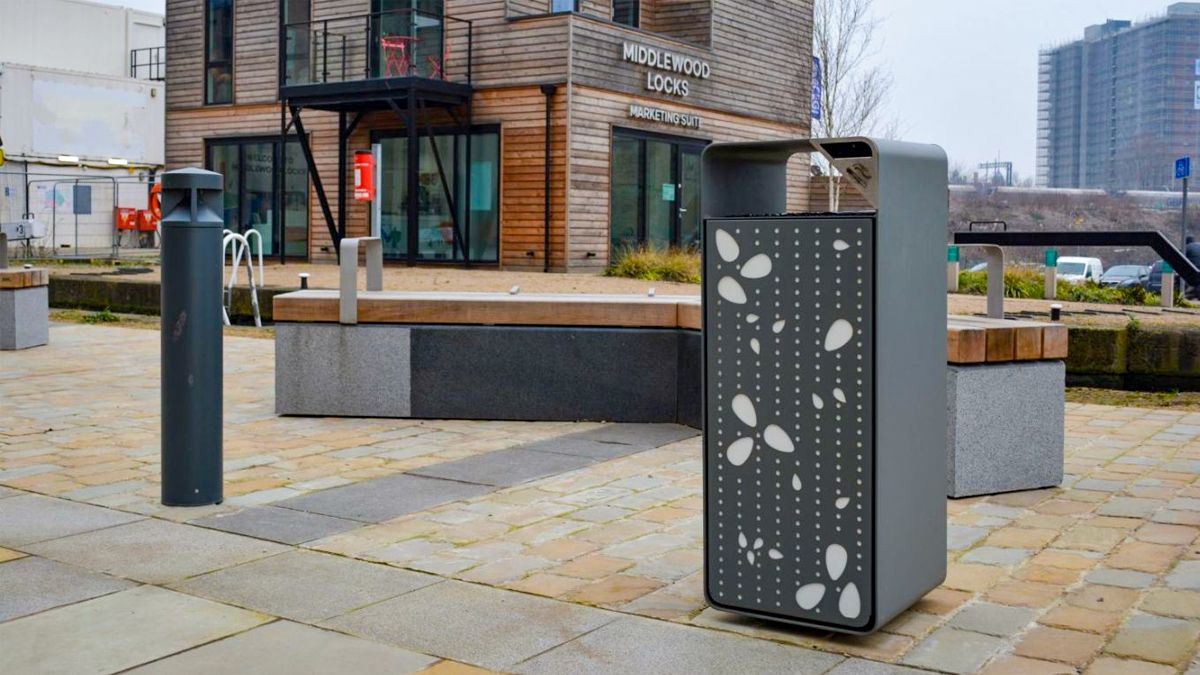
A good example of this integration is the BSFG project completed at Middlewood Locks, an extensive mixed-use development in Salford. Here, Box Litter Bins were provided featuring unique laser cut patterns and a durable powder coating finish to match contemporary granite and timber benches situated on a canal-side path.
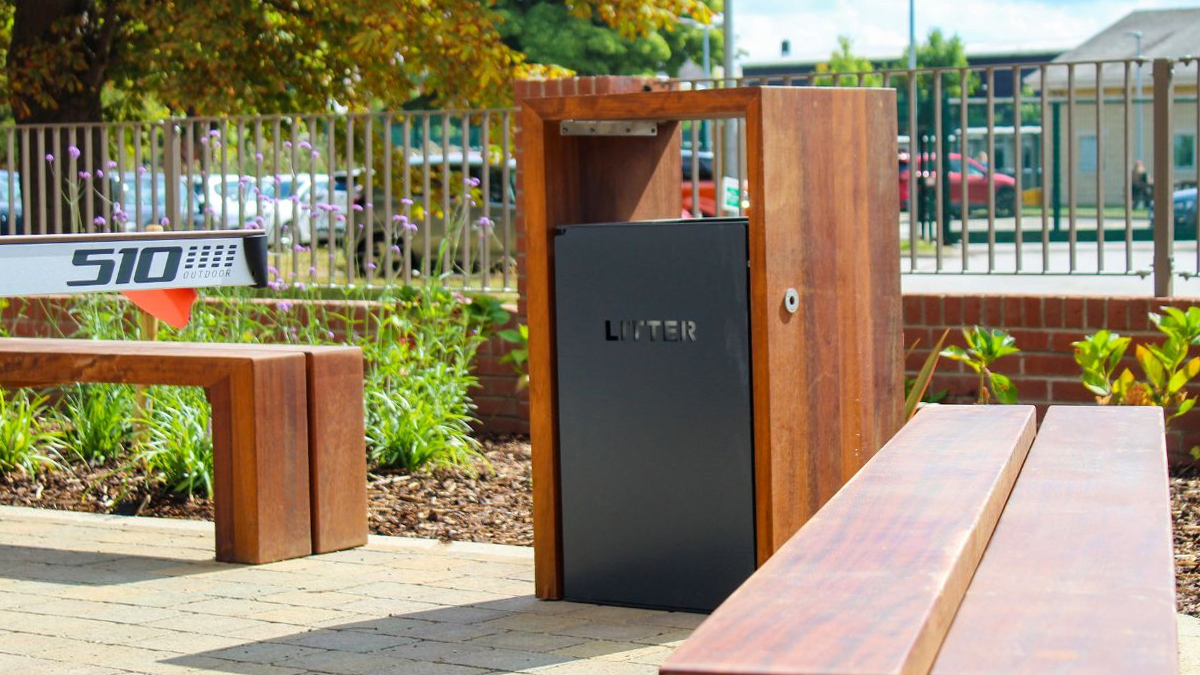
In another project, the Frederick House student accommodation scheme in York, BSFG’s Deacon range of street furniture was specified. This was chosen to offer a coordinated package of durable hardwood products to help create a natural and inviting environment, with the litter bins perfectly complementing elements including benches, picnic tables and seating cubes.
Best practice is to start by considering the characteristics of the site and possible locations for litter bins according to foot traffic and where people are likely to dwell or gather for extended periods. The extent of weather exposure may also be a key factor in the choice of bins, particularly in harsh environments such as coastal parks or sea front promenades.
Security, durability and ease of maintenance and repair are important considerations on all sites, particularly those which are unmonitored or open for long periods, including after dark when vandalism is more likely to occur.
Then there are questions about how the litter bins need to look. They are often required to match the aesthetics for specific environments, such as by incorporating logos of local authorities, schools and businesses, so consider how best to meet this objective. This is an areas in which BSFG has a strong track-record, having provided branded litter bin solutions for numerous developers over the past 20 years.
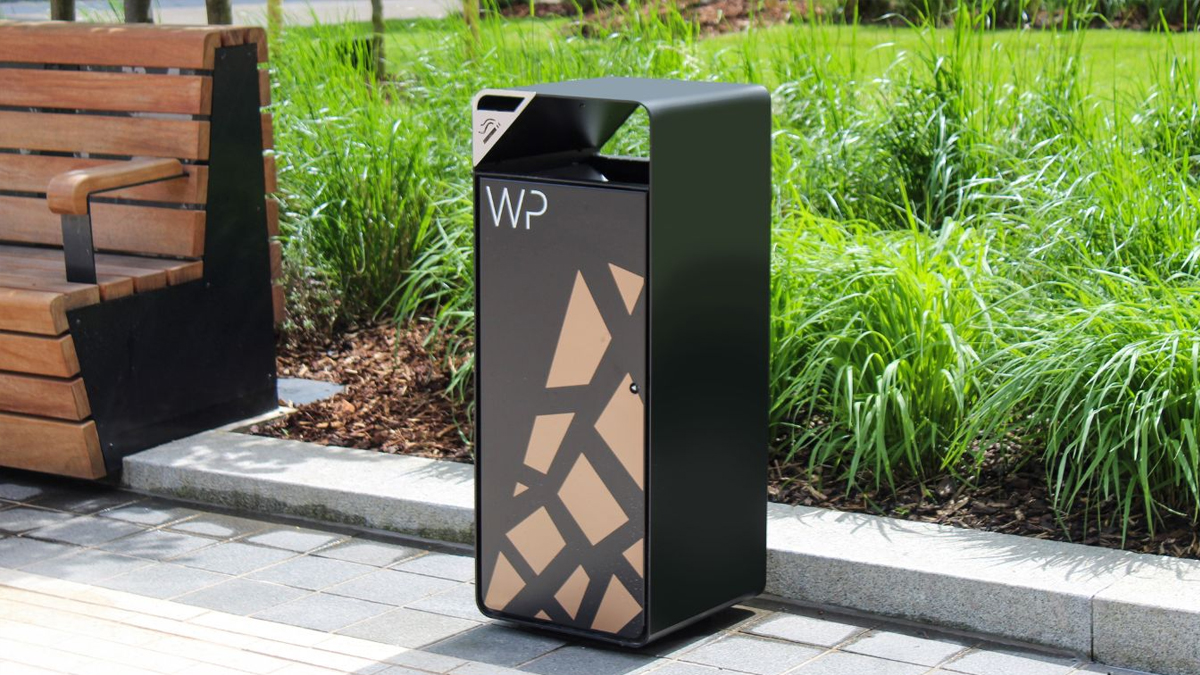
One example is Wellington Place in Leeds, a rapidly expanding commercial development in the heart of the city. Here, BSFG provided a bespoke version of the Box Litter Bin featuring the development’s “WP” logo as a customised decal to coordinate with the site’s recognisable branding.
Segregation for more efficient recycling
Another dimension to the litter management strategy is greater provision of separate bins for different types of waste to be recycled more easily. By enabling source-segregation, where materials such as metal, paper and plastic are separated at the point of disposal, site managers can simplify the process for recycling, and it helps site users adopt good habits that many will be used to in their own homes.
More broadly, this kind of separate-bin segregation is important to maximise waste diversion, minimise contamination and support the circular economy. And BSFG provides a variety of options for site owners and developers seeking to integrate waste segregation into their outdoor spaces, rather than install standard litter bins.
One recent project in which BSFG were tasked with providing such a solution was at Dalton Park, a shopping park in County Durham. In this project, bespoke FGP Litter Bins with colour coding to complement the bin’s simple design and encourage more site users to dispose of their different waste materials in the correct bins.
A slightly different approach was adopted at the University of Sheffield, where BSFG were commissioned to provide litter bins as part of a multi-campus refurbishment project. Two types of the Ascot Litter Bin were supplied with complementary aesthetics, enabling site users to separate out any materials suitable for recycling so they can place them into a single ‘mixed recycling’ bin, with everything else disposed of in a ‘general waste’ bin.
How technology is transforming how litter bins are provided and managed
Despite a seemingly correct level of bin provision and good user behaviour, litter issues can still result due to resource capacity limitations within the teams tasked with emptying and maintaining them. Thankfully, this is an issue that technology is helping to minimise in the form of BSFG’s recently introduced CitySolar smart bin.
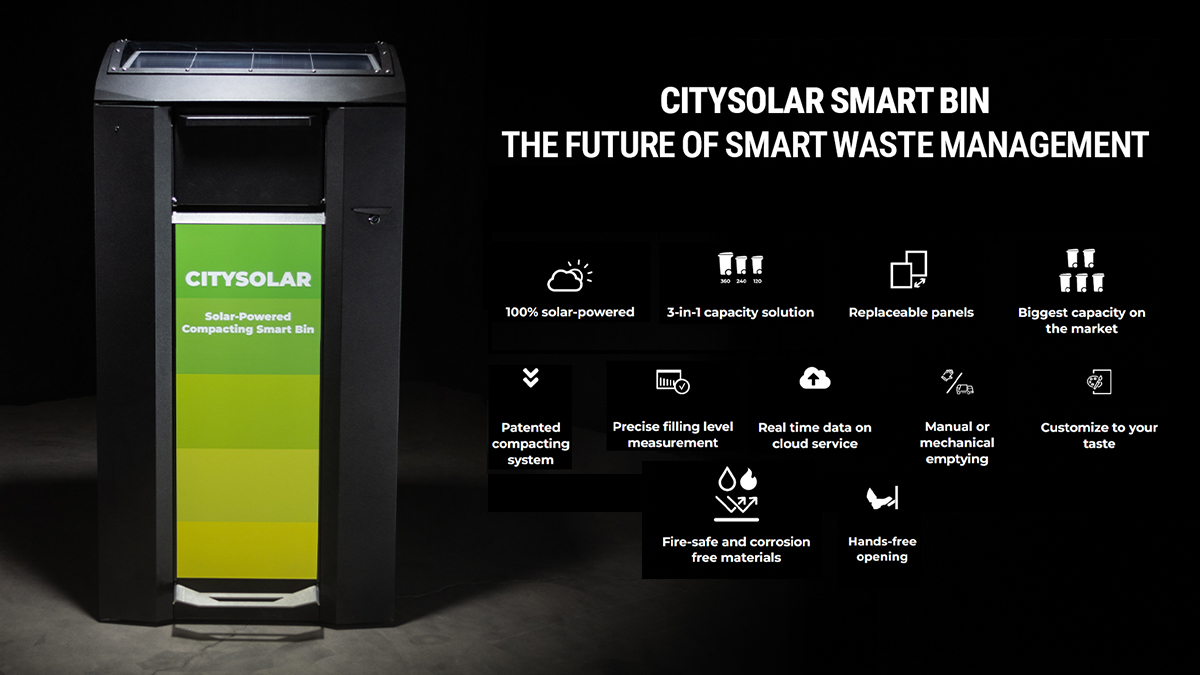
Developed in Finland, CitySolar is a waste-compacting smart bin powered by solar energy featuring unique patented technology to ensure it operates with maximum efficiency. Available in three sizes, the smart bin is capable of holding up to 2,000 litres of compacted waste before emptying is required – the equivalent of 8x standard 240 litre bins holding uncompacted waste.
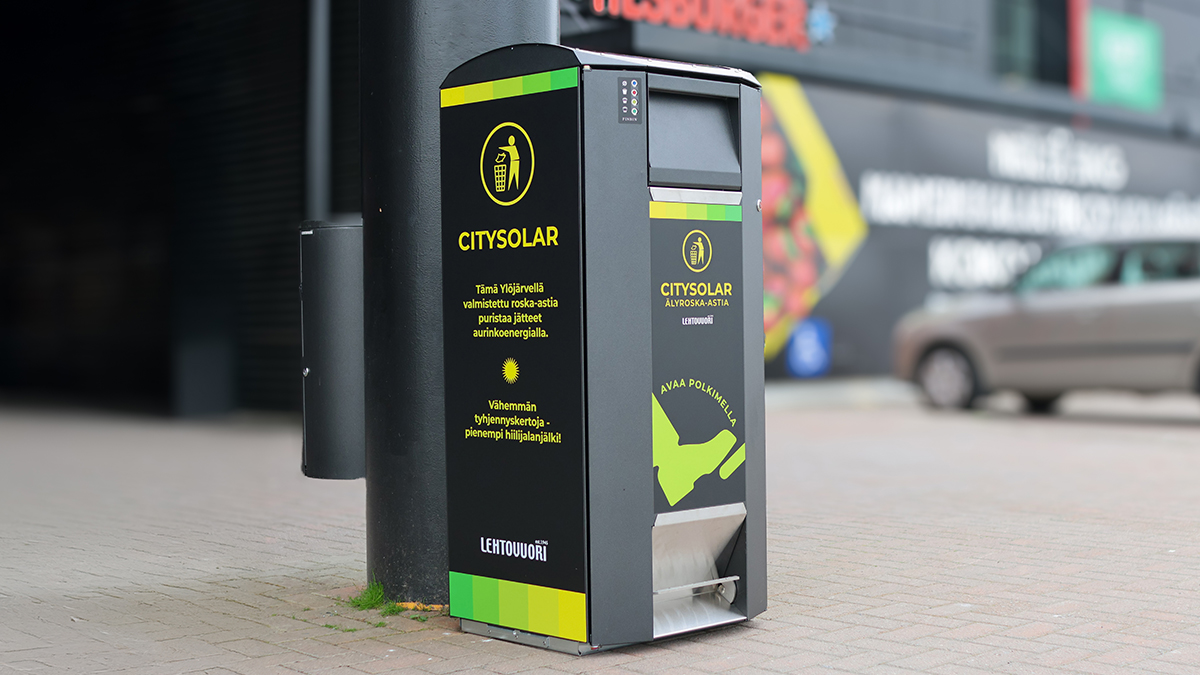
Given that the bin requires far less frequent emptying, it is a much more cost-effective choice than a standard litter bin. Despite its initial cost being higher, labour costs throughout its lifetime are much lower, and because it operates using solar power, there is no energy cost in-use. In addition, it is designed for durability, easy maintenance and repair with stainless steel panels forming the main enclosure and all other elements replaceable within minutes.